In short
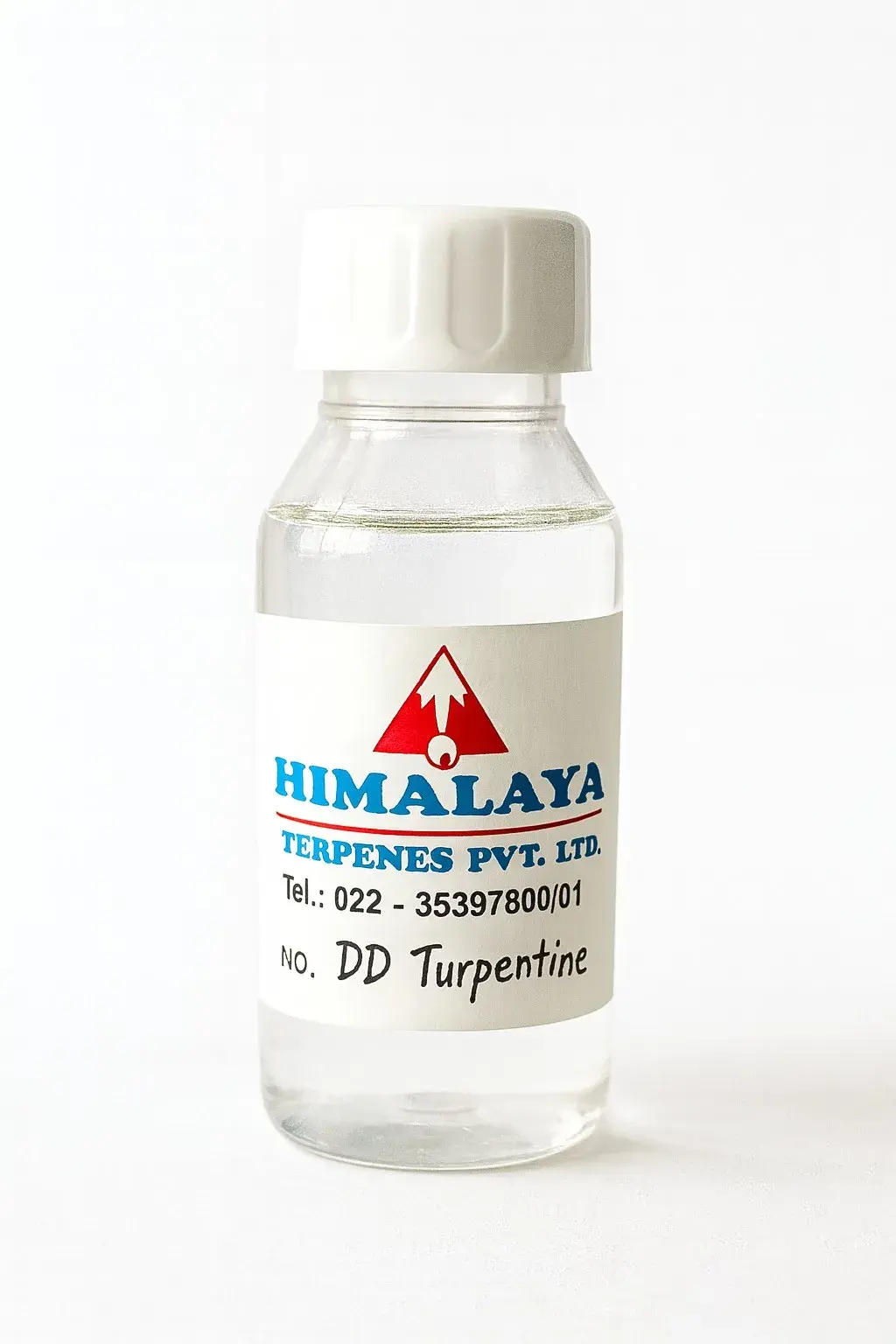
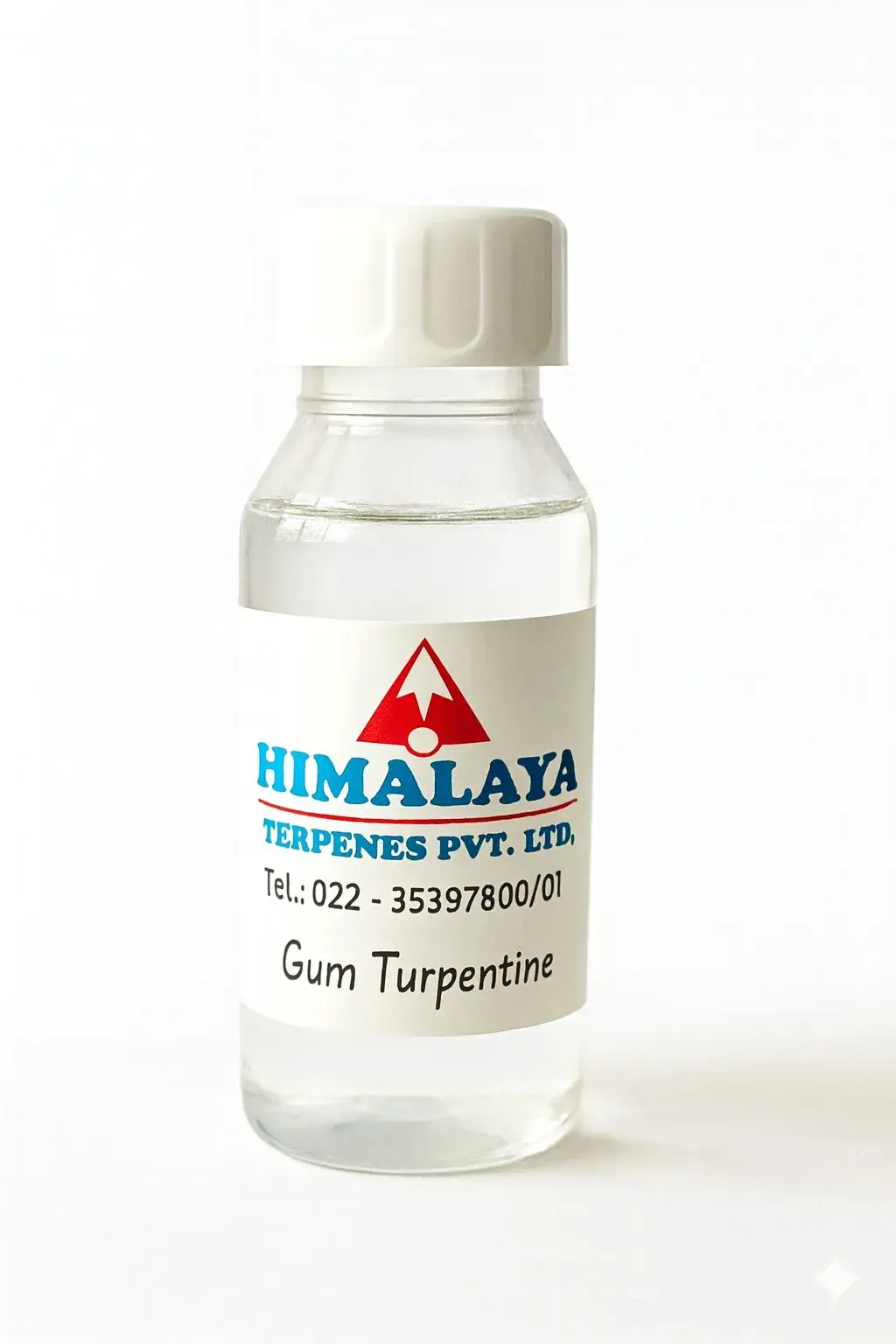
Gum Turpentine (CAS 8006-64-2) is a gum turpentine manufactured by Himalaya Terpenes Pvt. Ltd. at its ISO 9001:2015-certified plant in Mumbai, India. Turpentine is grouped into gum, wood and sulphate turpentine depending on the raw material it comes from; the gum variety is obtained by distilling pine resin. It is supplied in bulk in 2 grades for domestic and export orders, packaged as galvanized iron drum, about 175 kg net each; 80 drums (14,000 kg) per 20' fcl. Request a quote or PDS/MSDS via the contact form.
Gum Turpentine
Gum Turpentine — 100% Pure Gum Spirits of Turpentine, Uses, Price & Manufacturer
Product Specifications
| Manufacturer | Himalaya Terpenes Pvt. Ltd. |
| Origin | Mumbai, India |
| CAS | 8006-64-2 |
| Category | Gum Turpentine |
| Supply Scope | Bulk & Industrial Supply, 20+ Countries |
Description
Turpentine is grouped into gum, wood and sulphate turpentine depending on the raw material it comes from; the gum variety is obtained by distilling pine resin.
It is a colourless-to-pale-yellow oily liquid made up of various terpenes, and the double bonds and ring structures in those terpenes give it a versatile reactivity profile useful in downstream synthesis.
Alpha-pinene and beta-pinene make up most of its composition, with smaller amounts of carene, camphene, dipentene and terpinolene rounding it out — it's also commonly called turps.
Gum turpentine works as a solvent and as a feedstock for organic synthesis, including fragrance chemicals, and it finds its way into medicinal elixirs and cleaning products as well.
Documents & Quote
Specifications
| HS Code | 3805.10 |
| Molecular Formula | C10H16 |
| Molecular Weight | 136.24 |
| Grade | EP |
| Appearance | Transparent clear oily liquid |
| Color | Water white to slightly yellow |
| Acid Value | 0.5 max |
| Refractive Index | 1.465 to 1.475 |
| Relative Density | 0.856 to 0.872 |
| Optical Rotation | -28 to -40 |
| Package | Galvanized iron drum, about 175 kg net each; 80 drums (14,000 kg) per 20' FCL | 1000 L IBC drum, 18 IBC drums per 20' FCL | ISO Tank, 20,000 kg |
Application & Uses
-
Solvents: Thins oil-based paints and helps produce varnishes as a natural, plant-derived solvent.
-
Fragrance Chemical Synthesis: Serves as a feedstock for fragrance chemicals such as synthetic camphor, sandalwood compounds, camphor, linalool, alpha-terpineol and geraniol.
-
Pharmaceuticals: Used across the pharmaceutical industry, including as an ingredient in cough remedies.
-
Cleaning Products: Valued in cleaning and sanitary products for its antiseptic character and clean scent.
-
SMT Manufacturing: Applied as a cosolvent in SMT manufacturing processes.
-
Industrial Raw Material: Serves as a feedstock for manufacturing plasticizers and lubricants.
FAQ
What is Gum Turpentine and what is it used for?
Gum Turpentine is extracted by distilling pine resin, a colourless-to-pale-yellow oily liquid used as a solvent and as a feedstock for organic synthesis, including fragrance chemicals and medicinal elixirs.
What are the main industrial applications of Gum Turpentine?
It thins oil-based paints and varnishes, serves as a feedstock for fragrance chemicals like synthetic camphor, sandalwood compounds, linalool and geraniol, and is used in pharmaceuticals (cough remedies) and cleaning products.
How is Gum Turpentine obtained from pine trees?
It's the volatile fraction distilled off during pine oleoresin processing — the non-volatile residue left behind is gum rosin.
What is the difference between Gum Turpentine and Gum Rosin?
They're co-products of the same distillation — gum turpentine is the volatile liquid, gum rosin is the solid resin residue.
What terpenes are present in Gum Turpentine?
Mainly alpha-pinene and beta-pinene, with smaller amounts of carene, camphene, dipentene and terpinolene.
Which industries use Gum Turpentine as a raw material?
Paint and varnish manufacturers, fragrance chemical producers, pharmaceutical companies, and cleaning product formulators.
What are the key quality parameters of Gum Turpentine?
Colour (water white to slightly yellow), acid value (0.5 max), refractive index (1.465–1.475), relative density (0.856–0.872) and optical rotation.
How is Gum Turpentine processed into terpene derivatives?
Its alpha- and beta-pinene content is further refined or reacted to produce derivatives like terpineol, camphene, synthetic camphor and various fragrance chemicals.
How should Gum Turpentine be stored and handled?
Keep well clear of sparks, flames and ignition sources; store in a cool, well-ventilated, segregated, approved area with the container tightly sealed.
What should buyers consider when sourcing Gum Turpentine?
Confirm EP-grade specs (colour, acid value, refractive index, density, optical rotation), and consider double-distilled (DD) turpentine if a higher-purity, pleasant-smelling grade is needed for perfume/insecticide intermediate use.
Who supplies Gum Turpentine in bulk?
Himalaya Terpenes Pvt. Ltd. (Mumbai, India) supplies Gum Turpentine in bulk, in drums, bags, IBCs or ISO tanks depending on the grade, for domestic and export orders. The company is an ISO 9001:2015-certified pine-chemical manufacturer operating since 1971.
More from Gum Turpentine
Related Products