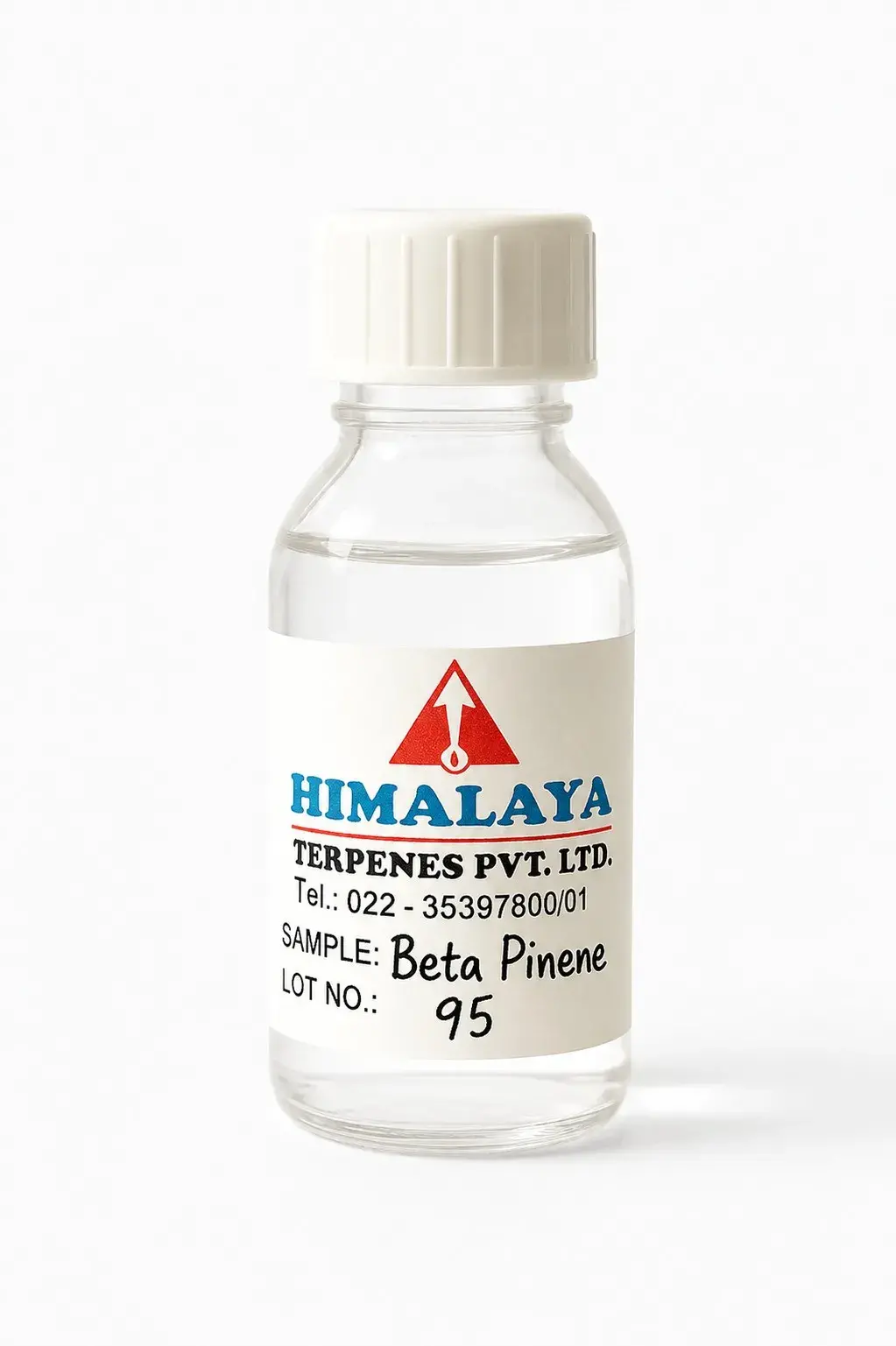
In short
Beta Pinene 98% (CAS 127-91-3) is a beta pinene manufactured by Himalaya Terpenes Pvt. Ltd. at its ISO 9001:2015-certified plant in Mumbai, India. Beta-pinene occurs alongside alpha-pinene in the turpentine oil of pine trees, with its concentration varying by pine species. It is supplied in bulk in 2 grades for domestic and export orders, packaged as galvanized iron drum, 175 kg net each, 80 drums per 20' fcl. Request a quote or PDS/MSDS via the contact form.
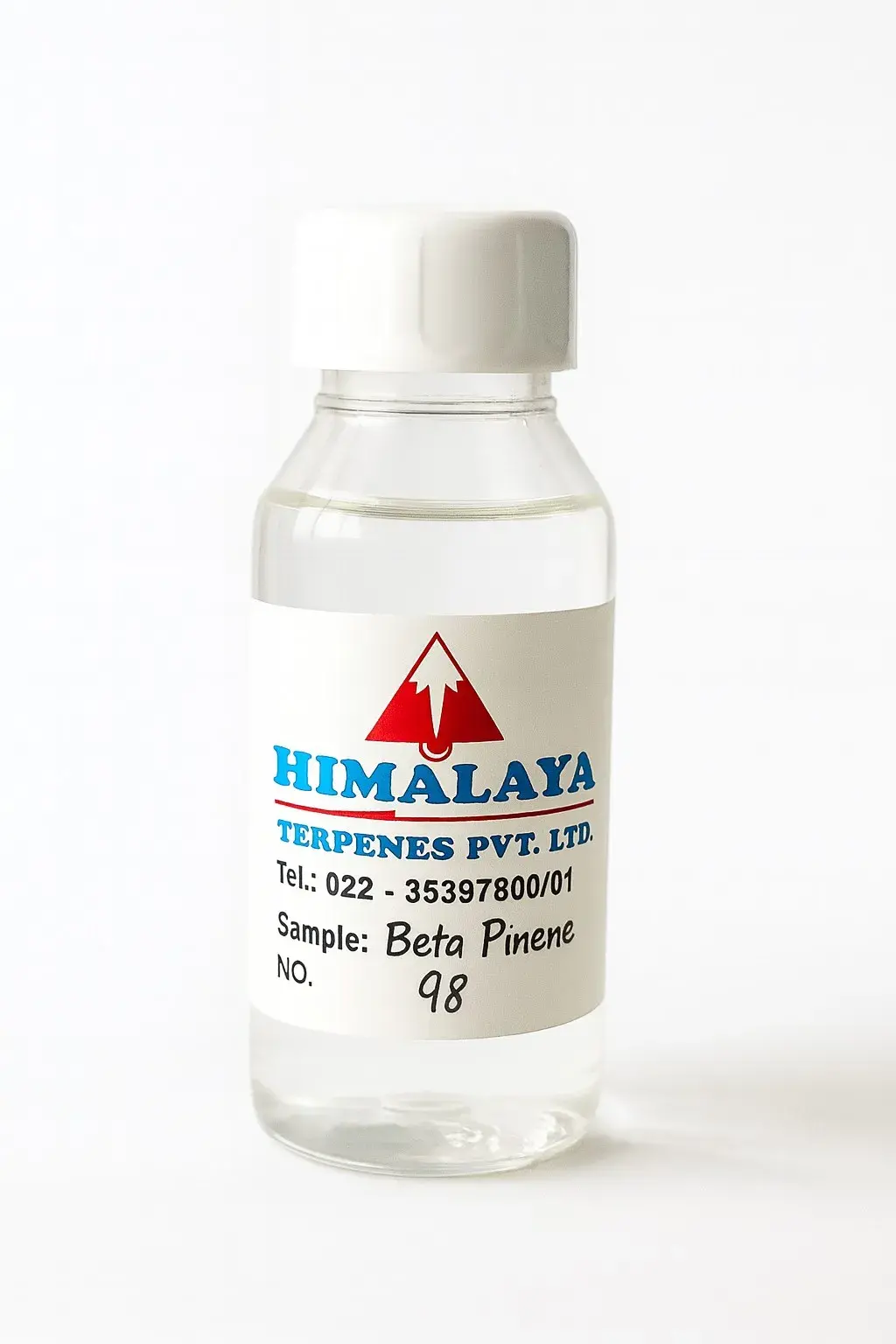
Beta Pinene 98%
Beta Pinene 98% — High-Purity Pinene Manufacturer & Supplier from India
Product Specifications
| Manufacturer | Himalaya Terpenes Pvt. Ltd. |
| Origin | Mumbai, India |
| CAS | 127-91-3 |
| Category | Beta Pinene |
| Supply Scope | Bulk & Industrial Supply, 20+ Countries |
Description
Beta-pinene occurs alongside alpha-pinene in the turpentine oil of pine trees, with its concentration varying by pine species. It's a light yellow liquid with a woody, pine-like odor, separated from turpentine oil industrially on a rectification tower.
Once refined, beta-pinene is a foundational fragrance raw material that also finds use in daily chemical formulations.
Heat cracking converts beta-pinene into synthetic feedstock for linalool, geraniol, nerol, myrac aldehyde, lyral, ambergris and other flavor compounds. In daily chemical products, the refined material is generally used at under 2% concentration.
Documents & Quote
Specifications
| HS Code | 290219 |
| Molecular Formula | C10H16 |
| Molecular Weight | 136.24 |
| Odor | Woody spicy |
| Purity, G.C | ≥ 98% |
| Acid Value, mg/g | ≤ 0.5 |
| Refractive Index @ n20/D | 1.476 ~ 1.481 |
| Relative Density @ d25/25 | 0.860 ~ 0.870 |
| Package | Galvanized Iron Drum, 175 kg net each, 80 drums per 20' FCL | Galvanized Iron Drum, 150 kg net each, 120 drums per 20' FCL |
Application & Uses
-
Myrcene Synthesis: Serves as the raw material for synthetic myrcene via heat cracking, feeding onward synthesis of linalool, geraniol, nerol, myrac aldehyde, lyral, ambergris and other flavor compounds.
-
Flavour & Fragrance: Used as a flavor and fragrance ingredient across daily chemicals and other industries, functioning as a foundational raw material for fragrance production.
-
Daily Chemicals: Incorporated into daily chemical formulations as a flavor ingredient, typically kept below 2% of the total content.
FAQ
What is Beta Pinene and what is it used for?
Beta-pinene is a monoterpene found alongside alpha-pinene in pine turpentine oil, used mainly as a feedstock for synthetic myrcene and as a fragrance ingredient in daily chemical products.
What are the major industrial applications of Beta Pinene?
Its biggest use is heat-cracking into synthetic myrcene, which feeds production of linalool, geraniol, nerol, myrac aldehyde, lyral and ambergris-type fragrance chemicals; it's also used directly as a fragrance/flavor ingredient.
How is Beta Pinene different from Alpha Pinene?
Both come from the same turpentine source but differ structurally — beta-pinene is the preferred route to synthetic myrcene, while alpha-pinene is used more for terpineol, linalool and camphor synthesis.
What products can be manufactured using Beta Pinene?
Myrcene, linalool, geraniol, nerol, myrac aldehyde, lyral and ambergris-type aroma chemicals are all commonly derived from beta-pinene.
Which industries commonly purchase Beta Pinene?
Fragrance and flavor manufacturers, daily chemical producers, and aroma-chemical synthesis companies.
What purity specifications are available for Beta Pinene?
It's typically supplied at 95% or 98% minimum purity (GC), with a refractive index of about 1.476–1.481 and relative density of 0.860–0.870.
How is Beta Pinene produced from turpentine-based raw materials?
It's separated from gum turpentine oil on an industrial rectification (fractional distillation) tower, alongside alpha-pinene.
What are the key physical properties of Beta Pinene?
It's a light yellow liquid with a fresh, woody pine odor, molecular formula C10H16, molecular weight 136.24.
How should Beta Pinene be stored and transported?
Keep containers tightly closed in a cool, dry, well-ventilated place, resealing them carefully once opened to prevent leakage or volatilisation.
What should manufacturers consider when selecting a Beta Pinene supplier?
Consistency of purity and refractive index/density specs, reliable batch-to-batch quality for continuous myrcene production, and proper handling and storage during transit.
What is the difference between Beta Pinene 95% and 98%?
The number is the minimum beta-pinene assay by GC. The 98% grade is the higher-purity option preferred for demanding fragrance and chemical synthesis such as myrcene and its derivatives, while the 95% grade is a more economical choice for general industrial use where the extra purity is not required.
Who supplies Beta Pinene 98% in bulk?
Himalaya Terpenes Pvt. Ltd. (Mumbai, India) supplies Beta Pinene 98% in bulk, in drums, bags, IBCs or ISO tanks depending on the grade, for domestic and export orders. The company is an ISO 9001:2015-certified pine-chemical manufacturer operating since 1971.
More from Beta Pinene
Related Products